Choosing a waterproof cable manufacturer requires more than finding a supplier that lists “waterproof cable” in its catalogue. Cables used around pumps, wells and outdoor equipment may face moisture, direct water contact, mechanical stress or prolonged submersion. Those conditions are not interchangeable, and neither are the cables designed for them.
A useful supplier should first understand the application, then recommend a conductor size, core configuration, insulation system and water-blocking structure that fit the equipment. This guide explains what buyers should confirm before comparing quotations for submersible pump and wet-environment cables.
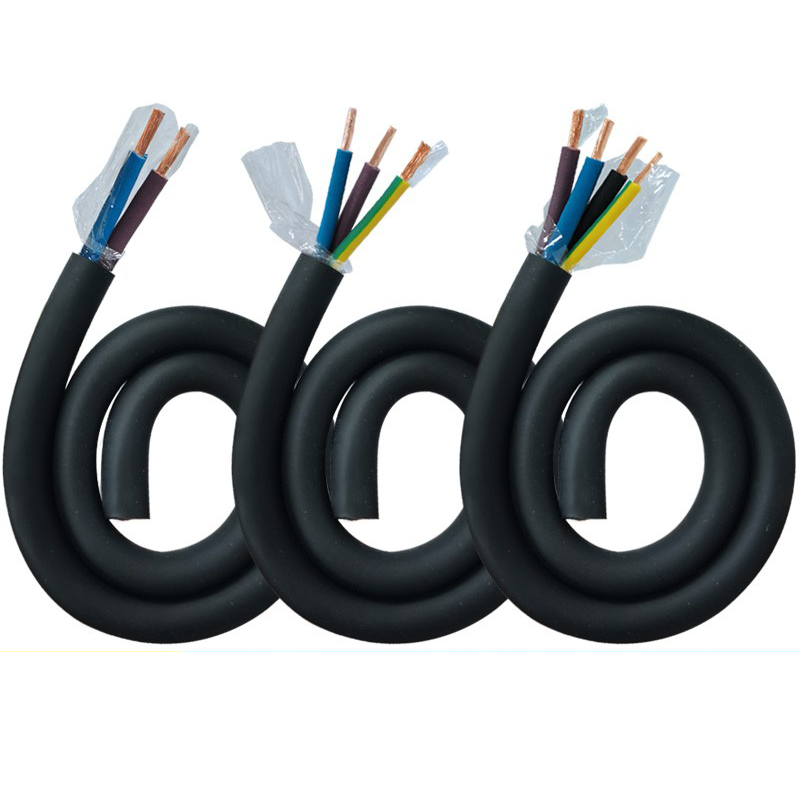
Cable selection should be based on the actual pump, installation depth and exposure conditions—not the word “waterproof” alone.
A standard PVC cable, a moisture-resistant cable and a cable intended for pump or submerged service are not necessarily the same product.
An ordinary flexible cable may tolerate occasional humidity or splashing, but that does not prove it is suitable for continuous water contact. A cable intended for wet environments normally uses insulation and sheath materials selected to resist moisture penetration. Some constructions also include internal water-blocking film or other barriers that help slow longitudinal water travel if moisture reaches the cable interior.
Even then, “waterproof” should not be treated as an unlimited claim. Suitability depends on cable construction, water depth, pressure, temperature, installation method, test conditions and the quality of joints and terminations. A responsible waterproof power cable supplier should define the intended application instead of promising that one cable works underwater indefinitely.
The first question should not be price per metre. It should be: Where and how will the cable be installed?
Give the manufacturer a clear description of:
These details can change the recommended construction. A courtyard-well pump cable, for example, may face different water pressure and chemical exposure from a drainage pump used on a construction site.
Movement is especially important. A flexible pump cable can be convenient to install without being a continuous-flex cable. If the cable repeatedly moves, winds onto a reel or operates in a drag chain, that duty must be stated separately.
The cable must match the electrical requirements of the pump motor. Conductor size affects current capacity, voltage drop, temperature rise and the maximum practical cable length. A long cable run may require a larger conductor than a short connection carrying the same current.
The buyer should provide the rated voltage, motor power, full-load current and required cable length. The manufacturer can then evaluate the appropriate conductor cross-section rather than selecting by motor power alone.
Core count also matters. Single-phase and three-phase pumps may require different arrangements, and some installations need a protective earth conductor or additional control cores. Confirm the wiring diagram before ordering.
Finally, verify the cable's rated voltage. A product marked 300/500V should only be considered where that rating is appropriate for the equipment and installation. Cable size, voltage and core count should be written clearly in the quotation and production specification.
The insulation protects each conductor, while the outer sheath protects the complete cable assembly. Both layers need to suit the working environment.
When comparing suppliers, ask for the actual material description rather than accepting a general phrase such as “rubber cable” or “waterproof PVC.” Different compounds can have different resistance to water, abrasion, temperature and chemicals.
Consider whether the cable will be exposed to:
The outer sheath should also be checked for a smooth, consistent surface, legible printing and uniform thickness. Material selection cannot compensate for damaged jackets, poor extrusion or unsuitable terminations.
Water resistance is not determined by the outer jacket alone. Depending on the design, a waterproof cable may combine:
These layers perform different jobs. Core insulation separates and protects the conductors. Internal water-blocking layers help limit moisture movement along the cable. The outer sheath provides the first mechanical and environmental barrier.
Ask the manufacturer to show a cable cross-section and explain the position of each layer. Also ask what test method supports the waterproof claim. Do not assume an IP rating unless the supplier provides an applicable test or certificate—IP classifications often apply to complete enclosures or connector assemblies, not automatically to a cut length of cable.
Cable ends and joints are also vulnerable. A suitable cable can still allow moisture ingress if the termination is not properly sealed.
A reliable submersible pump cable manufacturer should be able to provide more than a rendered product image. Request clear, current information showing:
The quotation should identify the conductor material, nominal conductor size, number of cores, rated voltage, insulation and sheath materials, finished outside diameter and packing length.
If the project has a defined test standard or approval requirement, state it before ordering. A general factory inspection and a third-party certification are not the same thing. Buyers should confirm which documents will be supplied with the shipment.
A capable custom waterproof cable manufacturer should be able to discuss more than standard stock sizes. Depending on quantity and technical feasibility, customization may include:
Ask how the supplier controls conductor size, insulation thickness, water-blocking materials and final outside diameter during production. It is also useful to confirm whether samples and bulk production will use the same approved materials.
Customization should begin with application data. Changing a colour or printed name is straightforward; changing conductor size, voltage rating or waterproof construction requires technical review.
Price per metre is only one part of the purchase. Before comparing offers, make sure each supplier is quoting the same specification and commercial terms.
Confirm:
A lower unit price may come with shorter reel lengths, different conductor material, fewer water-blocking layers or less suitable packaging. The correct comparison is the complete delivered specification, not an isolated metre price.
Rolan Cable's JHS waterproof cable is an example of a flexible, non-shielded, multi-core power cable for compatible pump and wet-environment applications. Its published standard construction includes:
| Item | Standard JHS information |
|---|---|
| Rated voltage | 300/500V |
| Core count | 2–5 cores |
| Conductor size | 0.5–6.0mm² |
| Conductor | Fine-stranded bare copper |
| Core insulation | Semi-rubber waterproof material |
| Outer sheath | Semi-rubber waterproof material |
| Internal barrier | PPT water-blocking film |
| Shielding | Unshielded |
The internal water-blocking film is used around the core area and beneath the sheath to help reduce longitudinal water penetration. The fine-stranded conductor also makes the cable easier to route during fixed pump and equipment installation.
However, the standard JHS model is not a continuous-motion drag-chain cable. If the installation involves repeated flexing, reeling or robotic movement, the motion data should be reviewed and a purpose-designed moving cable may be required.
The suitability of JHS for a specific submerged installation must still be confirmed using the actual depth, duration, temperature, water conditions, cable length and termination method.
To receive a useful factory quotation, send the following information:
Photographs, motor nameplate information and a wiring diagram can help the supplier identify missing details before production.
An ordinary flexible cable is primarily designed for convenient bending during installation or operation. A waterproof cable uses materials and, in some designs, internal barriers intended to reduce moisture penetration. Flexibility alone does not prove water resistance, and water resistance alone does not make a cable suitable for continuous movement.
It depends on the exact cable construction, installation depth, water pressure, temperature, duration, test conditions and termination method. Continuous underwater suitability should be confirmed in writing with the manufacturer for the specific application. The word “waterproof” should not be treated as an unlimited submersion guarantee.
JHS is designed for compatible submersible-pump, well, outdoor-equipment and wet-environment power connections. The buyer still needs to confirm voltage, motor current, conductor size, depth, length and water conditions before selection.
Yes. Depending on technical feasibility and order quantity, conductor size, core count, colour, printing, packing length and other details may be customized. The final construction should be approved before production.
At minimum, provide the pump type, rated voltage, motor power, conductor size, core count, cable length, quantity, installation depth, environmental conditions and destination. More complete application data generally produces a more accurate quotation.
A dependable waterproof cable manufacturer will not recommend a product based only on cable size or price. The supplier should ask about the pump, electrical load, water exposure, installation depth, cable length and termination method before confirming the construction.
Send Rolan Cable your pump type, rated voltage, conductor size, number of cores, installation conditions, required length and order quantity through our Contact Us page. Our team will review the application and provide a suitable waterproof cable specification and factory quotation.


